

What to Expect From Lab-Guided Testosterone Therapy
Wondering how lab-guided TRT works? Learn what to expect, from your first consultation to ongoing monitoring, with personalized testosterone care at PureRx.
Starting testosterone therapy raises a lot of questions. What happens first? How are dosing decisions made? How do you know it's working? For many men, the uncertainty around the process is just as much of a barrier as the symptoms themselves.
The good news is that lab-guided testosterone therapy is a well-structured, step-by-step process, and understanding what to expect from start to finish makes the decision to pursue it far less daunting. This blog walks you through the full journey, from initial consultation through ongoing monitoring, so you know exactly what's involved before you begin.
Why "Lab-Guided" Matters
Not all testosterone therapy is created equal. The most important distinction between a well-run TRT program and a poorly managed one is whether clinical decisions are grounded in real data.
Lab-guided means exactly what it sounds like: every recommendation, including whether to start treatment, what format to use, how to dose, and when to adjust, is informed by actual blood work, not guesswork or generic protocols. At PureRx's testosterone therapy program, treatment is recommended only when labs confirm low testosterone alongside a consistent clinical picture. No shortcuts, no assumptions.
This matters because testosterone interacts with many other systems in the body. Dosing without proper baseline testing, or continuing treatment without monitoring, is how problems develop. A data-driven approach protects both your safety and your results.
Step 1: The Consultation and Medical Intake
Everything begins with a thorough intake process. Before any treatment is considered, a licensed PureRx provider reviews:
Your symptoms, how long they've been present, and how they're affecting your quality of life
Your full medical history, including any current or past health conditions
Your current medications and any potential interactions to be aware of
Your goals, whether that's improved energy, better body composition, mood stability, libido, or overall well-being
This isn't a formality. The intake is where the clinical picture begins to take shape, and it directly shapes what happens next. Everything in your plan, if one is recommended, flows from this evaluation.
The consultation is private, online, and straightforward. No waiting rooms, no unnecessary delays.
Step 2: Lab Testing and Baseline Assessment
If a clinical evaluation warrants it, lab testing is ordered to establish your hormonal baseline. This typically includes measurement of:
Total testosterone: the overall level of testosterone in the bloodstream
Free testosterone: the biologically active portion, which is often more clinically relevant than total levels alone
LH and FSH: hormones that reveal whether low testosterone originates from the testes or the pituitary system
Estradiol: estrogen levels, which must be monitored alongside testosterone to maintain proper hormonal balance
Hematocrit and CBC: red blood cell markers, important for safety monitoring during treatment
PSA: a standard safety marker reviewed before TRT begins
These results give your provider the objective data needed to make a clinically sound recommendation, and serve as the reference point for every future monitoring check.
Step 3: Personalized Treatment Planning
Once lab results are reviewed alongside your intake information, your provider determines whether testosterone therapy is clinically appropriate for you, and if so, which format best fits your profile, preferences, and lifestyle.
At PureRx, several delivery formats may be considered:
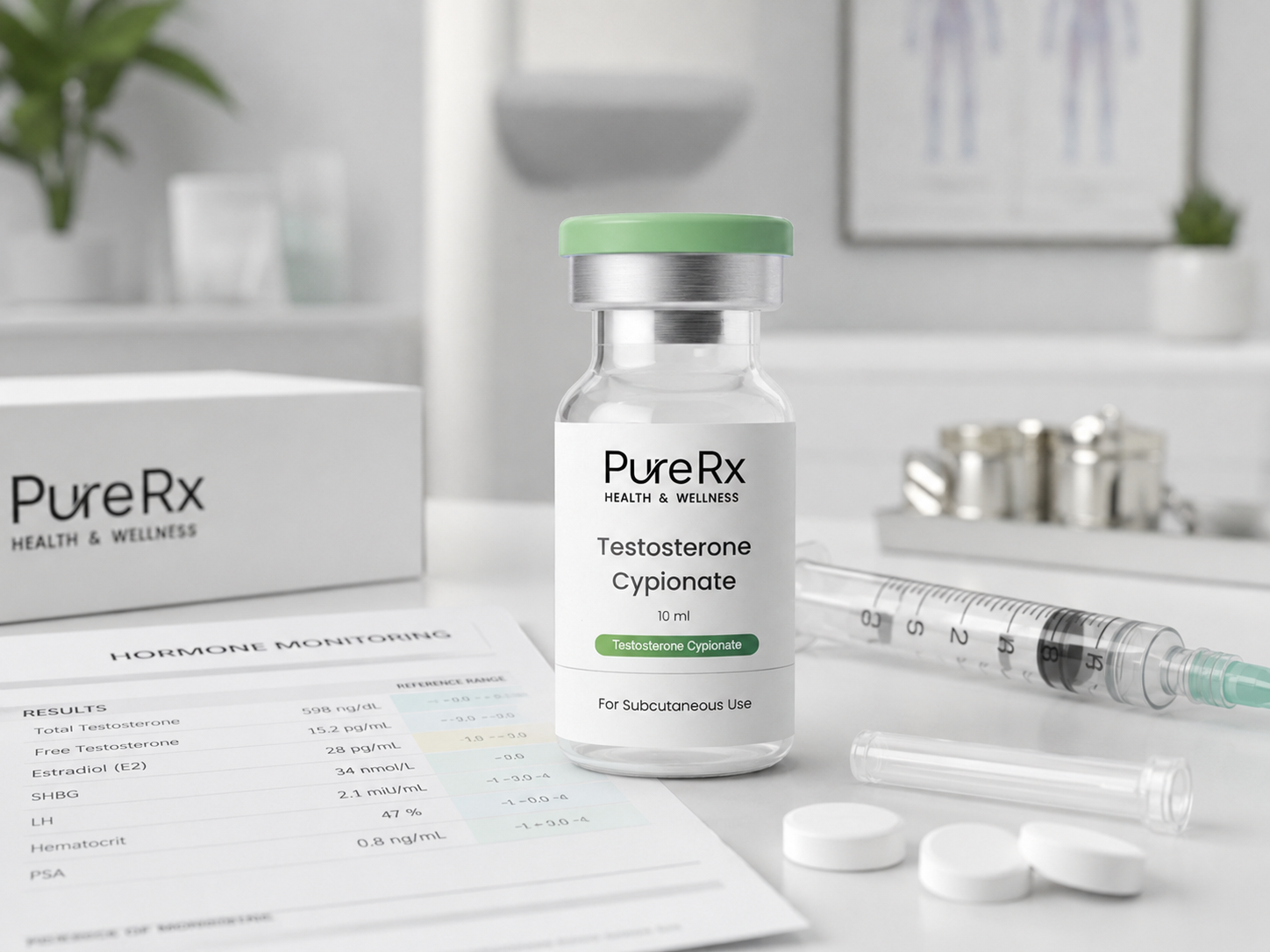
Injectable testosterone: typically administered on a weekly or bi-weekly schedule, this is one of the most commonly used formats. Options may include Testosterone Cypionate, Enanthate, Propionate, or Undecanoate, evaluated based on your clinical profile
Topical testosterone: gels or compounded creams applied daily, considered for patients who prefer a needle-free format
Oral and alternative delivery: including options like Kyzatrex, reviewed on a case-by-case basis based on medical history and provider assessment
Nasal testosterone: another alternative format considered where clinically appropriate
HCG: may be included in select plans, particularly relevant for patients with fertility considerations
No single format is automatically preferred. The right choice is whatever is clinically appropriate for you, based on your lab results, health history, preferences, and your provider's review.
Step 4: Starting Treatment and the Early Phase
Once a plan is established, treatment begins at a carefully considered starting dose, not at a maximized level. This approach allows your body to adjust gradually and gives your provider early data points to work from.
During the initial phase, most men ask the same question: When will I notice something?
Results vary by individual, but a general timeline often looks like this:
Weeks 2–4: Some men notice early shifts in mood, mental clarity, or energy levels
Weeks 4–8: Sleep quality and motivation may begin to improve
Months 2–4: More noticeable changes in body composition, strength, and libido typically develop as levels stabilize
Months 4–6+: Cumulative improvements in lean muscle, endurance, and overall well-being become clearer
It's worth setting realistic expectations here. Lab-guided TRT is not a rapid transformation; it's a progressive, monitored process. Sustained results require sustained clinical oversight.
Step 5: Ongoing Monitoring and Plan Adjustments
This is the step that separates a properly managed TRT program from a careless one, and it's where lab-guided care truly proves its value.
Follow-up lab work is conducted at regular intervals, especially during the early phase of treatment. These check-ins allow your provider to:
Confirm testosterone levels are within a healthy, physiological range
Monitor estradiol, hematocrit, and other key safety markers
Adjust dosing if levels are too high, too low, or if the body's response has changed
Review symptoms and ensure the treatment is producing the intended clinical benefit
At PureRx, ongoing monitoring is built into the care model, not offered as an optional add-on. Because testosterone interacts with multiple hormonal systems, regular oversight is what keeps both safety and effectiveness on track over time.
What About Related Health Concerns?
For some men, testosterone therapy is one piece of a broader health picture. Low testosterone frequently intersects with other concerns worth addressing in parallel:
Men experiencing sexual health issues alongside low testosterone, such as reduced libido or erectile difficulties, may benefit from exploring sexual health care as part of their overall plan
Men whose hormonal decline has contributed to body composition changes, increased body fat, and reduced muscle, may find value in discussing medically guided weight management alongside their TRT plan
For those interested in supporting physical performance and recovery, advanced peptides are another option worth raising during your consultation
A good provider will look at the full picture, not just one data point in isolation.
Is Lab-Guided TRT Right for You?
If you've been experiencing persistent fatigue, reduced drive, mood changes, or changes in body composition, and you're wondering whether low testosterone could be a contributing factor, the most productive thing you can do is find out.
Lab-guided testosterone therapy through PureRx is private, clinician-directed, and built around your individual data. There are no generic protocols, no pressure, and no treatment recommended unless the clinical case supports it.
Schedule a free consultation with a licensed PureRx provider today. Your first step is simply starting the conversation and getting the data that tells the real story.
Disclosure: Treatment options vary by patient. Any compounded medication prescribed is not FDA-approved and is not the same as an FDA-approved drug. Results vary by individual. This content is for informational purposes only and does not constitute medical advice.