

Low Testosterone or Burnout? How to Tell the Difference
Exhausted, unmotivated, and foggy? It could be burnout, or it could be low testosterone. Learn how to tell the difference and when to seek clinical support at PureRx.
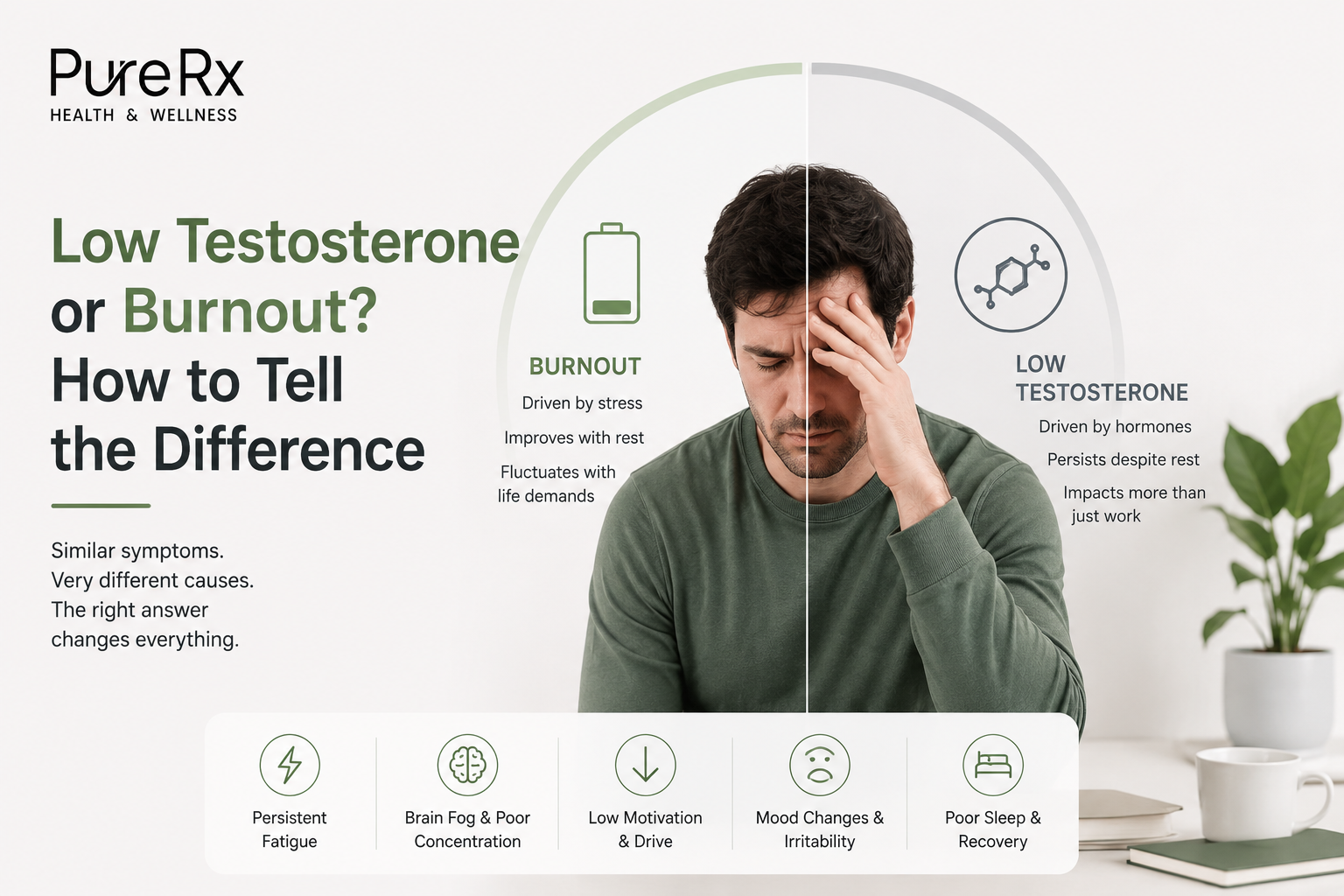
You're tired all the time. Your motivation has flatlined. You're not sleeping well, your mood is off, and the drive you once had, professionally, physically, personally, feels like it belongs to a different version of you. The easy explanation is burnout. And maybe it is. But for a significant number of men, what looks and feels exactly like burnout is actually something else entirely: low testosterone.
The problem is that these two conditions share so many overlapping symptoms that even clinically informed people struggle to separate them. And when the wrong explanation is accepted, the right solution never gets explored. This blog is designed to help you understand the difference and to know when lab-guided clinical evaluation might give you the clarity that no amount of rest or recovery will.
Why This Confusion Is So Common
Burnout is a real and well-documented condition. Prolonged stress, chronic overwork, lack of recovery, and emotional exhaustion can produce a cluster of symptoms that profoundly affect how a man functions day to day. Low testosterone, a clinical condition in which hormone levels fall below a healthy physiological range, produces a remarkably similar cluster.
Both can cause:
Persistent fatigue that doesn't resolve with rest
Reduced motivation and loss of drive
Difficulty concentrating or thinking clearly
Irritability, mood changes, and emotional flatness
Disrupted sleep
Withdrawal from activities that used to feel meaningful
When a man experiences these symptoms, the instinctive explanation is life, too much stress, too many responsibilities, not enough time to decompress. And sometimes, that's accurate. But sometimes the explanation is biochemical, not circumstantial, and no amount of vacation, better sleep hygiene, or stress management will resolve a hormonal deficit.
That distinction matters enormously for how the situation gets addressed.
How Burnout Typically Presents
Burnout tends to develop in a recognizable pattern. It usually follows a sustained period of high demands, work pressure, significant life stressors, prolonged poor sleep, or a combination of these, and builds gradually over time.
Key characteristics of burnout include:
Symptoms are closely tied to external circumstances; they tend to worsen during periods of high stress and improve meaningfully during genuine rest, vacation, or reduced workload
Emotional exhaustion is prominent, a sense of being depleted by responsibilities, relationships, or demands, rather than just physically tired
Cynicism and detachment, a loss of care or engagement with things that used to feel important
Recovery is possible with sufficient rest, boundary-setting, or removal of the stressor
The important clinical note: burnout is a response to the environment and circumstances. When those circumstances change even temporarily, symptoms often follow in kind.
How Low Testosterone Typically Presents
Low testosterone, by contrast, doesn't track with circumstance. It's a physiological state, not a situational response, and it tends to be more consistent, more pervasive, and more resistant to lifestyle changes.
Key characteristics of low testosterone include:
Fatigue that is constant and baseline, present even on low-stress days, after good sleep, after holidays
Physical changes that aren't explained by lifestyle, such as gradual loss of lean muscle, increased body fat (particularly abdominal), reduced physical strength, or endurance
Sexual health changes, notably reduced libido, which is a much less common feature of burnout, but a very consistent feature of low testosterone
Emotional flatness that feels more like a chemical shift than a circumstantial response, less reactive irritability, more pervasive low mood, or loss of interest
Symptoms that have been building slowly over months or years, rather than emerging in the context of a specific stressful period
One of the most useful clinical distinguishers: burnout tends to fluctuate with stress; low testosterone tends not to. If your fatigue, low drive, and mood changes persist even during periods of lower stress and adequate rest, and have been doing so consistently, that pattern warrants a clinical look rather than more lifestyle adjustments.
The Symptoms That Overlap Most — and How to Read Them
Because the overlap is so significant, it helps to look at the most commonly shared symptoms individually and consider what each one might be pointing to.
Fatigue: In burnout, fatigue is often emotional and mental as much as physical, the feeling of having nothing left to give. In low testosterone, fatigue tends to be more physical and constant, a baseline low energy that doesn't respond to rest in the way it should.
Motivation and drive: Both conditions reduce motivation significantly. But in low testosterone, this often extends to areas unrelated to work or stress, a loss of interest in hobbies, social connections, physical activity, and intimacy that was there before.
Mood and irritability: Burnout tends to produce reactive emotional states, heightened irritability in response to demands. Low testosterone more often produces emotional blunting, a flattening of affect, reduced enthusiasm, and a persistent undercurrent of low mood without a clear situational cause.
Brain fog and concentration: Present in both conditions, but in low testosterone, it often manifests as a persistent, baseline difficulty with clarity and recall, not just under pressure, but consistently.
Libido: This is one of the clearest differentiating factors. A meaningful, sustained reduction in sex drive is a hallmark symptom of low testosterone. It is not a primary feature of burnout. If reduced libido is part of your symptom picture, it significantly increases the clinical relevance of a hormonal evaluation.
What a Clinical Evaluation Actually Tells You
The only way to know with certainty whether low testosterone is a contributing factor is through lab testing. Symptoms alone, however consistent, are not sufficient for a diagnosis. A blood panel measuring total testosterone, free testosterone, LH, FSH, and other relevant markers gives you and your provider an objective picture that no amount of self-assessment can replicate.
At PureRx's testosterone therapy program, the evaluation process begins with a thorough clinical intake, reviewing your symptoms, medical history, current medications, and health goals, before any lab work is ordered and before any treatment is recommended. If labs confirm low testosterone alongside a consistent clinical picture, a personalized care plan is developed based on your specific profile.
If testosterone levels come back within a healthy range, that's valuable information too; it means the clinical picture points more clearly toward burnout, stress-related factors, or another underlying cause worth exploring separately.
When Both Are Present
It's worth acknowledging that burnout and low testosterone are not mutually exclusive. Chronic stress elevates cortisol, which can suppress testosterone production over time. In other words, prolonged burnout can contribute to declining testosterone, and low testosterone can make a person more vulnerable to burnout by reducing their resilience, recovery capacity, and emotional bandwidth.
For men in this situation, addressing only one factor leaves the other unresolved. A comprehensive clinical evaluation — one that looks at the full hormonal and lifestyle picture is the most efficient way to understand what's actually driving your symptoms and what needs to be addressed.
Connecting the Bigger Picture
For some men, the symptoms of low testosterone extend beyond fatigue and mood. If reduced libido or sexual health changes are part of the picture, PureRx's sexual health care may also be relevant to explore alongside hormonal support.
Similarly, if low testosterone has contributed to changes in body composition, increased body fat, and reduced lean muscle, incorporating medically guided weight management into a broader care plan is worth discussing with your provider. Hormonal health and metabolic health are closely linked, and addressing both together often produces more complete, sustained results.
For men looking to support physical performance and recovery alongside their hormonal care, advanced peptides are another option worth raising during your consultation.
Stop Guessing — Get the Data
If you've been attributing persistent fatigue, low drive, and mood changes to burnout for months or longer, without meaningful improvement, it may be time to look beyond lifestyle and get objective clinical data.
You deserve an answer based on evidence, not assumption. A licensed PureRx provider can help you understand whether low testosterone is a factor, what your labs actually show, and what a clinically appropriate response looks like for your specific situation.
Schedule a free consultation with PureRx today, private, online, and built around your individual health picture. The conversation might clarify everything.
Disclosure: Treatment options vary by patient. Any compounded medication prescribed is not FDA-approved and is not the same as an FDA-approved drug. Results vary by individual. This content is for informational purposes only and does not constitute medical advice.