

Common Causes of Erectile Dysfunction Beyond Age
ED isn't just an age issue. Discover the real causes of erectile dysfunction, from hormones to stress, and how clinician-guided sexual health care at PureRx can help.
When most men think about erectile dysfunction, they assume it's simply a byproduct of getting older. And while age can play a role, the reality is far more nuanced. Erectile dysfunction affects men across a wide range of ages, and in many cases, the root cause has nothing to do with age at all.
Understanding what's actually driving ED is the most important step toward addressing it, because the right approach depends entirely on the right diagnosis. If you've been experiencing difficulties and quietly assuming it's just "part of aging," this blog is worth reading.
ED Is More Common — and More Complex — Than Most Men Realize
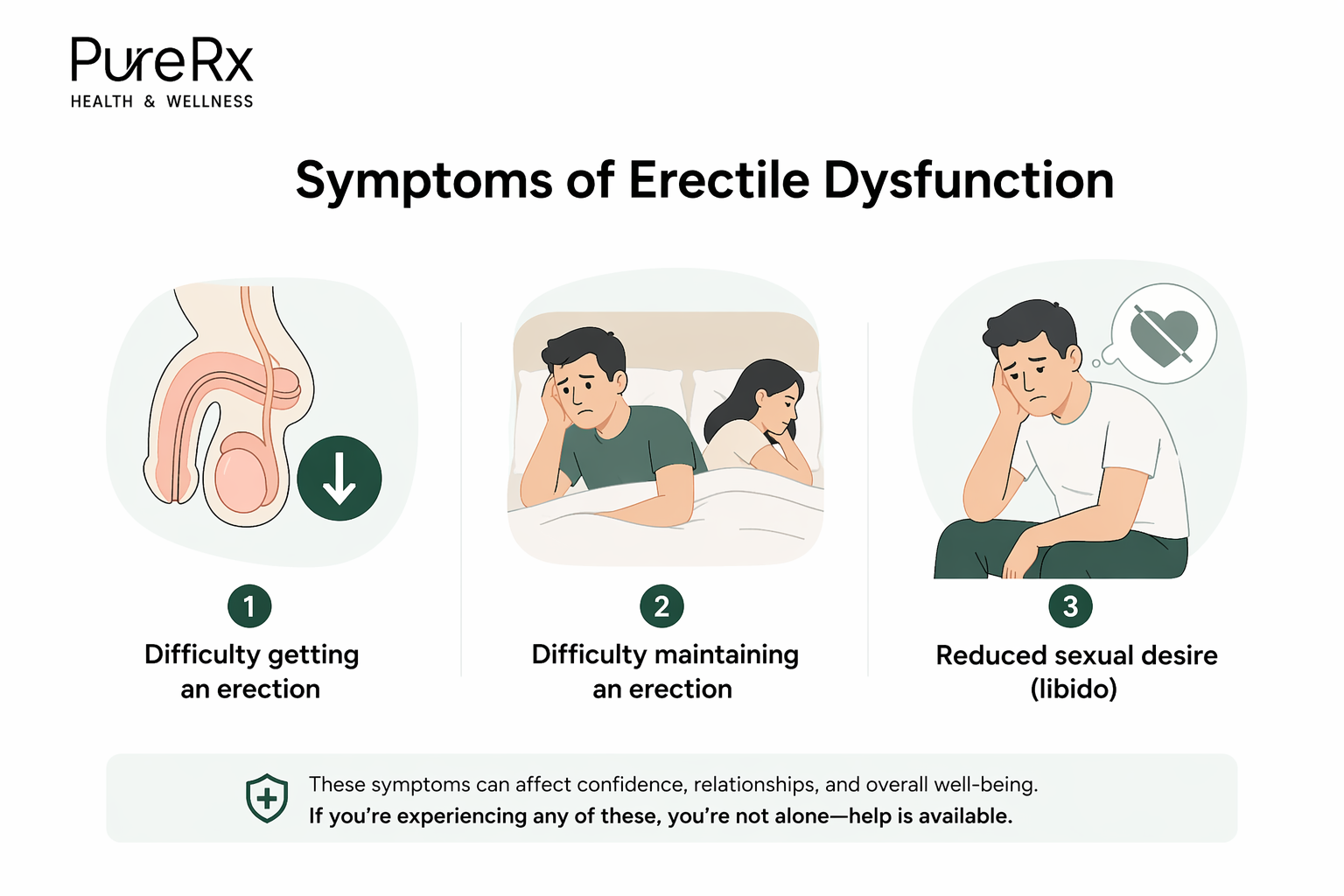
Erectile dysfunction is defined as the consistent difficulty achieving or maintaining an erection firm enough for sexual activity. It's estimated to affect tens of millions of men, and yet it remains one of the most underreported health concerns in men's health, largely because of stigma and the false belief that nothing can be done about it.
The truth is, ED is a symptom, not a standalone condition. In most cases, something else is driving it. And once that underlying factor is identified, effective, clinician-guided treatment becomes a realistic path forward through sexual health care.
Common Causes of Erectile Dysfunction Beyond Age
1. Cardiovascular and Circulatory Issues
Erections are fundamentally a vascular event; they depend on healthy blood flow to the penile tissue. This means that anything affecting circulation can directly impact erectile function. High blood pressure, high cholesterol, atherosclerosis (narrowing of the arteries), and poor cardiovascular health are among the most significant non-age-related contributors to ED.
In fact, ED is sometimes considered an early warning sign of cardiovascular problems. Men who develop ED in their 40s or younger are sometimes later found to have underlying circulatory issues that hadn't yet produced other obvious symptoms.
2. Low Testosterone and Hormonal Imbalances
Testosterone plays a direct role in sexual desire and erectile function. When levels fall below a healthy range, a condition more common than most men expect, the effects can include reduced libido, difficulty with arousal, and changes in erectile quality.
This is why addressing hormonal health and sexual health often go hand in hand. If ED symptoms are accompanied by fatigue, mood changes, or reduced drive, testosterone therapy may be part of the conversation worth having with a licensed provider.
3. Diabetes and Blood Sugar Dysregulation
Diabetes, particularly when poorly managed, can damage both the nerves and blood vessels that are essential for normal erectile function. Nerve damage (neuropathy) reduces the signaling needed to initiate an erection, while vascular damage restricts the blood flow required to sustain one.
Men with diabetes are significantly more likely to experience ED than those without it, and often at younger ages. Managing blood sugar is a key component of any broader treatment strategy.
4. Chronic Stress and Mental Health
The mind plays a powerful role in sexual function. Chronic stress, performance anxiety, depression, and relationship tension can all interfere with the psychological and neurological processes that make erections possible.
This is particularly relevant for younger men, who may experience situational or psychogenic ED driven more by anxiety than any physical cause. The challenge is that performance anxiety can become self-reinforcing — one difficult experience creates worry about the next, which creates another difficult experience.
Addressing mental health as part of a holistic sexual health plan is not just worthwhile, it's often essential.
5. Obesity and Metabolic Health
Excess body weight, particularly abdominal fat, is strongly associated with ED. The mechanisms are multiple: obesity contributes to reduced testosterone production, impairs circulation, increases inflammation, and elevates the risk of diabetes and cardiovascular disease, all of which are independent risk factors for ED in their own right.
For men managing weight concerns alongside sexual health, a broader conversation with a provider, including a look at medically guided weight management, can address several contributing factors at once.
6. Medication Side Effects
A range of commonly prescribed medications lists ED as a known side effect. These include certain antidepressants, antihypertensives (blood pressure medications), antihistamines, and others. If ED developed around the time a new medication was started, it's worth discussing with a provider; there may be alternatives or complementary approaches that reduce the impact.
7. Sleep Disorders
Poor sleep, particularly conditions like sleep apnea, has a measurable effect on testosterone production and overall hormonal health. Men who consistently get poor quality sleep often see downstream effects on energy, mood, and sexual function. Addressing sleep is one of the more overlooked yet impactful levers in men's health.
So What Can Actually Be Done?
Quite a lot, depending on what's driving the issue. At PureRx, sexual health care is approached through a thorough clinical evaluation, reviewing symptoms, medical history, current medications, and relevant health factors before any treatment is recommended.
Options that may be considered based on your individual profile include:
Sildenafil: a clinician-evaluated option reviewed for appropriateness, with follow-up as needed
Tadalafil: another well-established option with a longer duration, selected based on clinical review
Topical options: considered when appropriate, guided by clinical review
Cabergoline: evaluated case by case, with monitoring as appropriate
Every recommendation is individualized. No two patients receive the same plan, because no two patients have the same combination of contributing factors.
The Importance of Not Waiting
ED is not something men have to accept quietly. It's a medical concern with identifiable causes and real treatment options, and the sooner it's evaluated, the sooner meaningful progress can begin.
Beyond quality of life, some of the underlying causes of ED, like cardiovascular issues or unmanaged diabetes, benefit significantly from early attention. In that sense, addressing ED isn't just about sexual health. It's about overall health.
If you've been experiencing symptoms and haven't yet spoken to a provider, schedule a free consultation with PureRx today. The conversation is private, the process is simple, and the first step is easier than most men expect.
Disclosure: Treatment options vary by patient. Any compounded medication prescribed is not FDA-approved and is not the same as an FDA-approved drug. Results vary by individual. This content is for informational purposes only and does not constitute medical advice.